Serving Charleston, Greenville, & Columbia Areas





Trusted by 7952+ Customers
Ceiling Fan Installation and Replacement in Charleston, Greenville, and Columbia
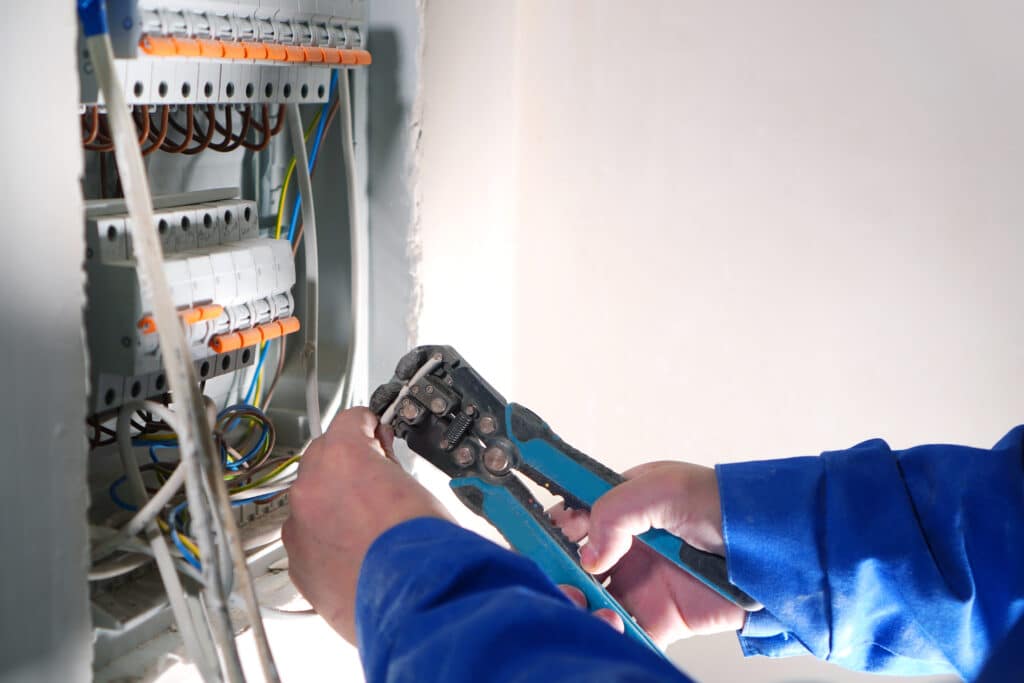
A ceiling fan should move air where you need it without wobbling, creating distracting noise, or hanging too low over the room. Getting those details right takes more than choosing a blade style. The fan, mounting support, ceiling height, wiring, and controls all need to work together.
At Preferred Home Services, we install and replace ceiling fans throughout the Charleston, Greenville, and Columbia areas. Our licensed electricians evaluate the installation location and existing electrical components before mounting the equipment. As part of our residential electrical services, we can also address wiring and control changes needed to complete the project.
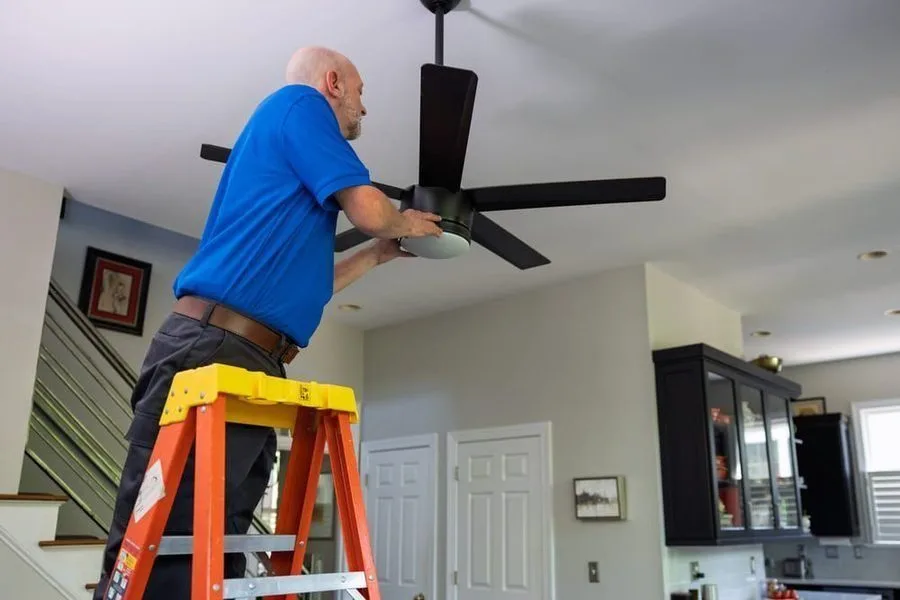
Ceiling Fan Installation for New and Existing Locations
Replacing an existing fan and adding one where none existed involve different work. We assess the proposed location before confirming whether the existing support and wiring can be used.
Replacing an Existing Ceiling Fan
An existing fan location provides a starting point, but it does not establish that every component is suitable for the replacement. We inspect accessible wiring, mounting hardware, and support, then check compatibility with the new fan’s weight and installation requirements.
Replacement can also change how the fan operates. A model with an integrated light, remote receiver, or dedicated wall control may need a different wiring or switching arrangement from the equipment being removed.
Replacing a Light Fixture With a Fan
A box that supports a ceiling light may not be suitable for a fan’s weight and movement. Before converting the location, we confirm that the installation has fan-rated support or an appropriate structural mounting arrangement.
We also review blade clearances, ceiling height, and the available conductors. If you want independent wall control of the fan and light, additional wiring or a compatible control system may be necessary.
Adding a Fan Where No Wiring Exists
A new location requires planning for both electrical supply and structural support. We assess the framing, access above the ceiling, available circuit, and route to the proposed switch.
Our wiring and rewiring services can support those additions. Before work begins, we explain whether routing the wiring is likely to require openings in finished walls or ceilings and clarify the associated restoration responsibilities.
Selecting a Fan That Fits the Space
A fan that looks right in a showroom may not suit the room where it will operate. We review the equipment specifications alongside the room’s dimensions, ceiling configuration, and intended use.
Important considerations include:
-
Blade span and published airflow performance
-
Ceiling height and required clearances
-
Standard, low-profile, or downrod mounting
-
Compatibility with sloped ceilings
-
Indoor, damp-location, or wet-location rating
-
Lighting output and control options
-
Access for cleaning and future maintenance
These details help establish whether the selected equipment can be installed appropriately. We recommend reviewing the location before purchasing when the ceiling is unusually low, high, or sloped, or when the fan will be installed outside.
High and Sloped Ceilings
A high ceiling may require a manufacturer-approved downrod to position the fan effectively while maintaining required clearances. Sloped ceilings may also need an approved angle-mount accessory compatible with the ceiling pitch.
We check the mounting requirements rather than assuming that a standard bracket or longer downrod will work. Installation access and the surrounding ceiling construction also affect the project scope.
Bedrooms and Lower Ceilings
Bedroom installations need to balance airflow, sound, lighting, and clearance around furniture. A low-profile fan may be appropriate where the ceiling height allows it, but the complete assembly still needs to meet the manufacturer’s clearance requirements.
We also discuss how you want to operate the fan at night. Accessible controls and separately adjustable lighting can make the installation more useful than relying on pull chains alone.
Ceiling Fan Wiring, Switches, and Controls
The control arrangement should suit both the fan and the existing wiring. Some models use separate switched conductors for the motor and light, while others rely on a compatible receiver, remote, or proprietary wall control.
We evaluate those requirements before connecting the equipment. A standard lighting dimmer should not be used to control a fan motor unless the equipment is specifically designed for that arrangement.
When changes are needed, we can coordinate switch and control installation with the fan project. For light kits, we also verify the applicable lamp, driver, and dimming requirements so the controls match the selected equipment.
Covered Porch and Outdoor Ceiling Fans
Outdoor ceiling fans need a rating suited to the actual exposure. A damp-rated fan may be appropriate beneath a covered porch where it remains protected from direct rain, while locations exposed to precipitation require equipment rated for wet conditions.
We assess the mounting position, surrounding exposure, wiring, and connections before installation. An indoor fan should not be moved outside simply because the area has a roof.
Porch additions and outdoor living projects may also require new electrical supply or changes to existing lighting. We can coordinate the fan installation with related outdoor lighting work so fixture placement and controls are planned together.
What Wobbling, Noise, or Poor Operation Can Mean
A wobbling fan does not always need complete replacement. Loose hardware, blade alignment, damaged components, or unsuitable mounting can affect operation, and the cause should be identified before the equipment is used further.
Stop operating a fan that moves excessively, appears insecure, smells hot, or produces grinding or electrical crackling sounds. We can evaluate the accessible installation and explain whether mounting corrections, compatible replacement components, electrical troubleshooting, or a new fan is appropriate. Broader circuit concerns can be addressed through our electrical repair services.
Our Ceiling Fan Installation Process
We begin by reviewing the fan specifications and the location where it will be installed. That allows us to identify support, access, and electrical requirements before assembly starts.
Inspect the Location and Support
We check the existing box or structural mounting arrangement, accessible wiring, ceiling conditions, and required clearances. If the location needs additional support or electrical corrections, we explain that work before proceeding.
Assemble and Mount the Fan
We assemble the equipment according to the manufacturer’s instructions and install the approved mounting components. The installation accounts for the selected downrod, ceiling angle, and any required accessories.
Connect the Fan and Controls
We make the appropriate electrical connections and install compatible controls included in the agreed scope. Where the model uses a receiver or pairing process, we follow the equipment’s setup requirements.
Check Operation and Review Use
We check fan speeds, lighting, controls, and operation for excessive movement or unusual noise. Before finishing, we explain relevant features and how to change airflow direction according to the manufacturer’s instructions.
Charleston Area Ceiling Fans for Porches and Older Interiors
A fan on a Charleston porch has different requirements from one in an upstairs bedroom. Around Mount Pleasant, James Island, and other coastal locations, we consider moisture exposure and the suitability of materials for the environment, alongside the fan’s damp- or wet-location rating. Covered spaces can still receive wind-driven rain, so the mounting location deserves attention before equipment is selected.
Inside older Charleston and West Ashley homes, ceiling details and existing support can determine how the installation proceeds. Plaster, decorative medallions, and previous electrical alterations may require a more careful approach than a straightforward replacement. In North Charleston and Summerville homes where a central light is being converted to a fan, we also discuss how the change affects illumination. A fan’s light kit may not replace the useful light previously provided by the fixture, making coordinated indoor lighting improvements worth considering.
Greenville Area Ceiling Fans for Tall Ceilings and Converted Rooms
In a Greenville-area living room with a vaulted ceiling, choosing a larger fan does not resolve every airflow problem. The mounting height, ceiling angle, and position relative to the seating area matter just as much. We review those conditions before recommending the installation arrangement, including manufacturer-approved accessories needed to keep the fan appropriately positioned.
Other projects begin with a change in room use. A bonus room in Greer or Simpsonville may now serve as an office, while a renovated room in Taylors or Mauldin may need airflow without sacrificing overhead lighting. We assess the available clearances and control options around that use. In older Greenville houses and former mill homes, we also confirm the existing fixture support and accessible wiring rather than treating an established ceiling location as ready for a fan.
Columbia Area Ceiling Fans for Long Summers and Everyday Comfort
During the Midlands’ long cooling season, a ceiling fan can make an occupied room feel more comfortable by moving air across the people using it. That can be useful in Columbia and Forest Acres bedrooms or in living areas where the household prefers different levels of air movement. We plan placement and controls around those preferences instead of assuming one high-speed setting suits everyone.
A family room in Lexington or Irmo may need broad airflow over a seating area, while a smaller room in West Columbia or Cayce may call for a more compact installation. We assess fan size, mounting height, and furniture clearances accordingly. Fans do not remove humidity or lower the room’s air temperature, so persistent overheating or moisture concerns may require separate HVAC evaluation. Used appropriately, a fan complements air conditioning rather than replacing it.
Using Your Ceiling Fan Effectively
Ceiling fans improve personal comfort through air movement. Energy savings depend on how they are used, including whether that added comfort allows you to adjust the thermostat.
Turn the fan off when the room is unoccupied unless there is a specific reason to keep it running. For models with reversible operation, follow the manufacturer’s seasonal guidance; a low-speed reverse setting may help redistribute warm air in some rooms during colder weather without creating a strong draft.
Ceiling Fan Installation Cost
Installing a customer-supplied ceiling fan typically costs approximately $390–$415, although the installation conditions determine the final price. An existing suitable location has a different scope from a project needing new wiring, additional support, or access to a high ceiling.
We assess the selected fan, mounting conditions, wiring, controls, and access before providing pricing. The general range is an estimate and does not replace a quote for the work required in your home.

Schedule Ceiling Fan Installation or Replacement
Whether you are replacing an aging fan, converting a light fixture, or adding airflow to a new location, we can assess what the installation requires. Our electricians explain the mounting, wiring, and control arrangements before completing the agreed work.
Contact Preferred Home Services to schedule ceiling fan installation or replacement in the Charleston, Greenville, or Columbia area. We will help you plan an installation suited to your room, equipment, and everyday comfort.
$500 Off
New Electrical PanelDisclaimer

How Can We Make You Smile Today?
Frequently Asked qUESTIONS
Expert Answers To Common Questions
TESTIMONIALS
Hear From Our Satisfied Customers
GianLuca Siciliano
2 days ago

Very attentive, detailed screening and photo collection provided
Catherine Johnson
4 days ago
Chris was super helpful! We did a free plumbing inspection and he didn’t try to “create” problems only told us what actually needed to be fixed. Definitely recommend the company, we have had nothing but kindness and knowledge from all techs from HVAC to plumbing.
Ernest Nickerson
4 days ago
Noah, Garrett,Jacob,Mac where very friendly and nice, Noah explained everything in detail.
Dan & Fran Sherry
4 days ago
Jonathan and Hunter did a great job. They were meticulous and efficient in their work. They left the worksite clean and in good order when the job was done
Catherine Johnson
5 days ago
Chris was super helpful! We did a free plumbing inspection and he didn’t try to “create” problems only told us what actually needed to be fixed. Definitely recommend the company, we have had nothing but kindness and knowledge from all techs from HVAC to plumbing.
Al Schneider
5 days ago
Bryson and Toni were awesome! Couldn't ask for any two better. They got the job done the way it should be done.
Bonnie Walski
5 days ago
Your company is great, your technician Corey, is the reason why!!!!!
Douglas Keel
5 days ago
Eric was great!!! Explained everything and went over our options for future service and repair. Will contract soon!
Karen Mims
5 days ago
Austin was very thorough and went over everything he did and pointed out anything that needed attention.
Patrica Lindros
5 days ago
Griffin was very knowledgeable, efficient, and committed to helping me. He truly understood what my needs were and met my expectations. Trustworthy
Penny Fry
6 days ago
UPDATE: Even after several years of service from Preferred Home, we are very happy and satisfied with them. Communication has not wavered at all, and the techs are always on time, courteous, and knowledgeable. ORIGINAL POST: After receiving the Preferred intro offer in the mail a few months ago, we made the decision to schedule our annual HVAC maintenance checkup with them. Our tech today was very professional and friendly, and clearly presented a few beneficial upgrades for our system. He did not use high pressure sales tactics which is much appreciated. We are signing up for the annual maintenance plan; so far, we are very happy with the high level of communication received from the Preferred office. We are hoping to become a long-term satisfied Preferred customer.
Linda Isbell
6 days ago
Corey Breaux was extremely nice and thorough. Would highly recommend.
FANTASTIC!! Called and 1 hour Jesse was here. Did the work quickly and professionally. Couldn't be more pleased. Highly recommend.
Ashley Thornton-Abee
6 days ago
Jesse Webb was very informative and thorough with his work, will be contacting Preferred home again for my plumbing needs!
Rebecca Logan
7 days ago
Outstanding service Mylacks team,
Tara and Noah helping understand quote and save being a Preferred Partner plan. Chris, Garrett and Porter for answering all my questions on install new Pex water lines and fixtures.
I will recommend Preferred Services to all my friends and family.
Joseph Huss
7 days ago
Professional, knowlegable, polite and enjoyable. Ben is a great guy who gives great honest and forward information, assistance and more.
Bob Menges
7 days ago
Absolutely fantastic job by technician John Messervy who came out to do a systems check up on my HVAC. Very knowledgeable and very thorough! Grateful for a terrific and conscientious job John.
Carl Jackson
7 days ago
Excellent service call.
Michael Bachmann
1 week ago
Preferred Home Service Technical Representatives Jalen & Jacob were exemplary & professional!!!! Their thorough examination, corrective actions, and professional recommendations were reassuring in the knowledge that our HVAC System was fully operational! SIncere Thanks!
Credibility You Can Trust Across Every Platform