Serving Charleston, Greenville, & Columbia Areas




Trusted by 7939+ Customers
Water Filtration Services in Charleston & Greenville, SC
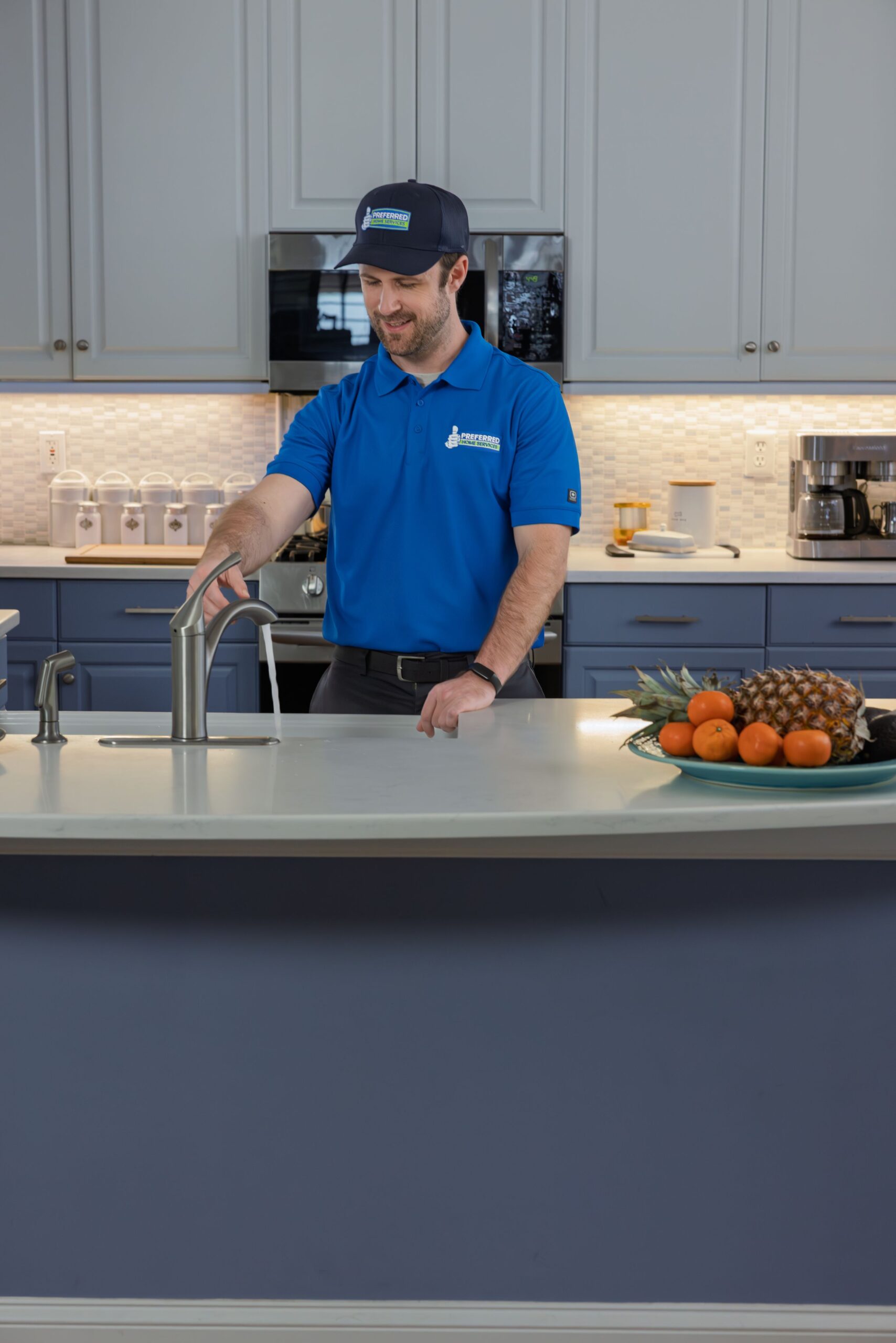
Water filtration should solve a defined problem. Some homeowners want better-tasting drinking water. Others notice sediment at several fixtures, have a private well, or want to reduce a substance identified by a water test. Those situations do not call for the same equipment.
Preferred Home Services helps homeowners in the Charleston and Greenville areas choose and install water filtration systems based on their water source, household use, and treatment goals. Our plumbers can evaluate whole-home filtration at the point where water enters the house, drinking-water filtration at a kitchen sink, or a combination of the two. The first step is understanding what you want the system to change and whether the proposed filter is designed to do it.
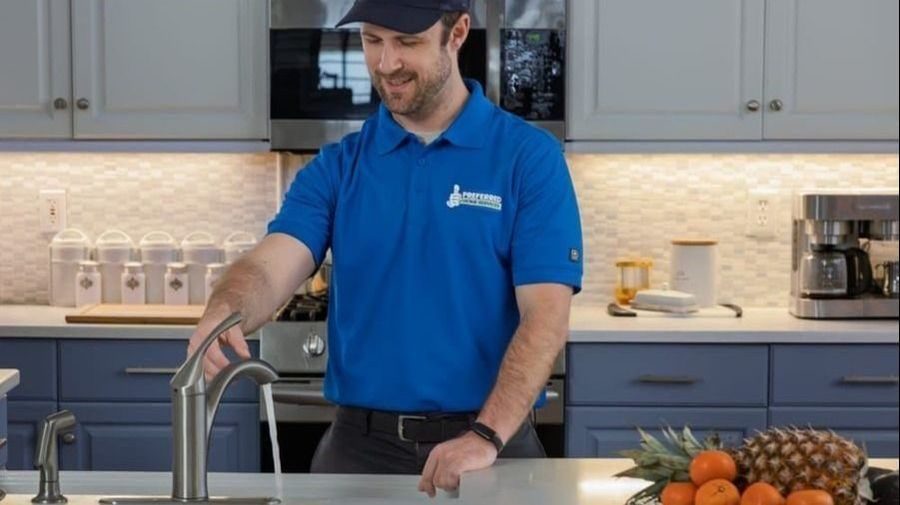
Start With the Water, Not the Filter
A filter can improve one aspect of water while doing little for another. Before recommending equipment, we discuss what you have noticed, where it occurs, and whether the home receives municipal or private well water.
Useful starting points include:
-
Taste or odor: Does the concern occur at every faucet or only one? Is it present in cold water, hot water, or both?
-
Visible particles: Do you see grit in faucet screens, cloudy water, or sediment collecting in fixtures?
-
Drinking-water concerns: Is there a specific substance you want to reduce, and has testing identified it?
-
Fixture or appliance concerns: Are you seeing mineral deposits, staining, or reduced performance that may require a different type of water treatment?
-
Changes in the home: Did the issue begin after plumbing work, a water-main disruption, or a change to the well system?
For a municipal-water home, the water provider’s quality report is a useful reference, but it does not describe every condition that may develop within an individual home’s plumbing. For a private well, testing is especially important because the owner is responsible for understanding that water source. A treatment recommendation should follow the concern and the available evidence, rather than assume that every South Carolina home needs the same whole-house filter.
Water Filtration Options for Your Home
Whole-Home Sediment Filtration
A sediment filter is installed near the point where water enters the home. It captures particles within the filter’s rated range before they move through the household plumbing. This may be useful when testing or inspection identifies sediment affecting multiple fixtures.
Filter size and placement matter. A filter that is too restrictive or left in service beyond its replacement interval can affect flow. We look at the home’s water demand, existing pressure, and the source of the particles before recommending a setup. If sediment appears only at one faucet, we may need to investigate that fixture or its supply line first.
Whole-Home Carbon Filtration
A properly selected carbon system can address certain taste and odor concerns throughout the home. The exact results depend on the media, how long water remains in contact with it, the household’s flow rate, and the specific claims verified for that product.
Not every carbon filter reduces the same substances. If you want to address a particular disinfectant, chemical, or other identified concern, we review the equipment’s performance information before recommending it. Whole-home carbon filtration also needs a maintenance plan: media does not remain effective indefinitely.
Under-Sink Drinking-Water Filtration
When the concern is primarily the water used for drinking and cooking, a point-of-use system at the kitchen sink may be a more focused choice than treating every gallon entering the house. Depending on the goal, options may include a dedicated drinking-water faucet or a filter serving the existing cold-water line.
We consider the available cabinet space, plumbing connections, expected water use, replacement-filter access, and the specific substances the selected product is certified to reduce.
Reverse Osmosis Drinking-Water Systems
Reverse osmosis, or RO, uses a membrane as part of a multi-stage system to treat water at a particular fixture, commonly the kitchen sink. It may be worth considering when the homeowner’s drinking-water goals call for treatment beyond what a simpler filter provides.
RO is not automatically the best option for every household. It requires room for its components, periodic filter and membrane service, and a drain connection for reject water. We explain those requirements and the system’s water use before installation so you can compare it with other drinking-water options.
Treatment for Private Well Water
A private well can present different concerns from a municipal supply. A well owner may need to investigate bacteria, nitrates, iron, manganese, sediment, pH, or other conditions, but no single filter addresses that entire list.
If you have a well near Charleston, Greenville, or a surrounding community, current test results give us a better foundation for discussing treatment. Some findings may call for a sequence of equipment or a specialist assessment rather than a standard cartridge filter. We will identify what a proposed filtration system can address and where additional treatment or testing is needed.
Filtration and Water Softening Do Different Jobs
Homeowners often use “water filter” to describe any water-treatment equipment, but the distinction matters when selecting a system. Sediment filtration captures particles. Carbon filtration can address certain taste and odor concerns. Reverse osmosis treats drinking water at a specific fixture.
Hardness is a different issue. If you are seeing persistent scale on fixtures or in water-using equipment, a hardness test can help determine whether water softening should be considered. A standard sediment or carbon filter should not be presented as a solution for dissolved hardness minerals.
The same principle applies to staining, corrosion concerns, and unusual odors: identifying the cause comes before choosing the treatment.
Water Filtration Considerations in Charleston and Greenville
Charleston-Area Homes
Charleston Water System draws water from Bushy Park Reservoir and the Edisto River and treats it before distribution. Its treatment process includes disinfection using chlorine dioxide and chloramines. For a homeowner served by that utility, a taste or odor concern should be evaluated in light of the actual water supply and the filter’s verified performance.
Greater Charleston also includes homes served by other water providers and private wells. We confirm the source at your property instead of assuming a water-quality report for one utility represents every home in the Lowcountry. If discoloration or particles appeared suddenly after a service interruption, the first step may be to investigate that change rather than install a permanent filter immediately.
Greenville-Area Homes
Greenville Water draws from Table Rock Reservoir, North Saluda Reservoir, and Lake Keowee, then treats and monitors the water it distributes. A Greenville homeowner’s treatment goal may still be specific to their home, such as improving drinking-water taste or addressing particles observed at several fixtures.
Outside the municipal service area, some Upstate homes rely on private wells or other providers. We account for that difference during the assessment. A system selected for a tested well-water issue may look very different from one chosen to improve the taste of treated municipal water.
How We Plan and Install a Water Filtration System
A useful installation plan answers two questions before work begins: What is the system intended to reduce, and what will it take to keep working?
Our process may include:
-
Discussing the concern: We ask what you have noticed, how long it has been happening, and which fixtures are affected.
-
Reviewing the water source and available results: We consider the utility report, relevant water-test findings, or whether additional testing is needed before equipment is selected.
-
Checking the plumbing: We identify a suitable installation location, assess access to the supply line, and consider pressure, flow, household demand, and future filter changes.
-
Comparing treatment options: We explain whether a whole-home system, a kitchen drinking-water system, or a combined approach fits the stated goal. We also review the product’s claims for the substance or condition of concern.
-
Installing and checking the system: We connect the equipment, check for leaks, flush or start it according to the manufacturer’s instructions, and confirm proper operation.
-
Explaining maintenance: You receive guidance on replacement intervals, access to consumable parts, and signs that the system needs service.
If the water concern points to a plumbing fault, we will explain that distinction. For example, an issue that appears only in hot water may call for a closer look at the water heater, while an unexplained change in pressure or supply may warrant assessment of the main water line.
Keeping Your Water Filtration System Effective
Filtration is an ongoing service commitment, not a permanent result from a one-time installation. Cartridges, carbon media, and RO components have different replacement needs. Actual service intervals depend on the equipment, water conditions, and household use.
We explain the maintenance requirements before you choose a system. If a filter becomes clogged, flow may decline. If treatment media is exhausted or components are not replaced as directed, the system may no longer deliver the reduction you purchased it to provide. For a concern confirmed by testing, follow-up testing may also be appropriate to verify the treatment result.

Schedule Water Filtration Service
You should be able to explain what your water-treatment system is designed to do, why it fits your home, and how it will be maintained. Preferred Home Services can help you make that decision with a review of your water source, plumbing, and goals.
Schedule water filtration service in the Charleston or Greenville area to discuss whole-home filtration, under-sink drinking-water filtration, or reverse osmosis installation with our plumbing team.
FREE
Bioclean with Every Drain CleaningDisclaimer

How Can We Make You Smile Today?
Frequently Asked qUESTIONS
Expert Answers To Common Questions
TESTIMONIALS
Hear From Our Satisfied Customers
David Baker
2 days ago

Joe did a great job. Thank you!
John
2 days ago
Corey Breaux was really knowledgeable and friendly Very helpful
Buddy
3 days ago
Kevin replaced a two bulb flood light and repaired a second light that had the internal bulb holder loose inside the globe. He made it look easy and was a pleasure to watch, a true professional and the best I have seen. He even parked his vehicle on the road rather than risk blocking me out of my driveway.
Julia Kelly
3 days ago
Christopher was professional, thorough and efficient. His discussion about membership was so clear, I decided to get onboard as a member.
Jennette Wescott
4 days ago
Technician came out and assessed the problems with our plumbing pipes under in the bathrooms and under the house. They were wonderful in assisting my husband and I with getting a Loan company to cover the plumbing job. Ben Plumbing crew in Charleston: Chris, Jacob and Porter are Great guys and did an outstanding job on replacing the plumbing pipes. The guys are very skilled with their plumbing work; they assessed the problem and explained the work they were going to do ; then explain any findings and fixed the problem. The guys were friendly, professional and approachable; my husband and I were comfortable talking with them. After completing the project, the guys made sure they cleaned up All their working areas. We would definitely refer our friends and family about the work Ben crew had done. Ben Crew deserves a SPECIAL TREAT or Bonus..
Kyle Snyder
4 days ago
Griffin was beyond professional and amazing! Hr even dealt with our hectic schedule and one and a half year old running around! 10/10 would recommend him.
alvin lewis
4 days ago
Jaylen did a wonderful job during our service appointment today! He was prompt, professional and very knowledgeable.
Smith Walker
5 days ago
Excellent service that was was preformed in a timely manner. Benjamin offered great service with a great attitude and professionalism. Thanks again
Open Rap
5 days ago
Ben's Battalion did a great, quick and professional job handling my home repair! Thanks to Garret, Chris, Brian and Mac!
Vann Cochran
5 days ago
I have an excellent service call today from Griffin. Fuel is though the system was thoroughly checked out and received a professional report. I will use them again.
DeAnna Akers
5 days ago
William was excellent, concise, quick, and friendly.
Jennette Wescott
6 days ago
Technician came out and assessed the problems with our plumbing pipes under in the bathrooms and under the house. They were wonderful in assisting my husband and I with getting a Loan company to cover the plumbing job. Ben Plumbing crew in Charleston: Chris, Jacob and Porter are Great guys and did an outstanding job on replacing the plumbing pipes. The guys are very skilled with their plumbing work; they assessed the problem and explained the work they were going to do ; then explain any findings and fixed the problem. The guys were friendly, professional and approachable; my husband and I were comfortable talking with them. After completing the project, the guys made sure they cleaned up All their working areas. We would definitely refer our friends and family about the work Ben crew had done. Ben Crew deserves a SPECIAL TREAT or Bonus..
Luciano D'Amico
6 days ago
Professionnel, through, and we'll spoken
Jason Todd
6 days ago
justin was friendly , skilled and make everything easy
Jan hawkins
6 days ago
I recently decided to installl a new HVAC system and meet with Logan to get an estimate on the cost.
He was right on time with a big smile and warm handshake.
We sat down and discussed what my needs were and how he could make things work for ME! He did a thorough walk through, explained his findings and was very patient answering my questions.
He then discussed with me his recomendations which would fit my needs.I never felt I was being pressured or rushed to make my decision.
I am happy to have found this company and a dedicated employee like Logan to help me get my new HVAC!
Follow up :
Had my new HVAC installed last week and Vince and Alex did a great job! They had some tight spots to work installing but they knew what they were doing and got everything done in one day.
They answered questions and educated me on how the system worked. They registered my system with the manufacturer for me which was so helpful.
Few days later I had a few questions on the outside unit. They came back a few hours later and made sure all was running properly.
Great company with excellent teamwork.
Will use again!
Jan hawkins
6 days ago
Had maintenance of my HVAC today performed by Ben. He greeted me with a smile and was on time and courteous.
He sat down with me explaining what he would be doing on the units and mindful of my questions. He showed me areas of concern and offered options on how they could be repaired or replaced.He gave me time to discuss the choices and I never felt rushed or pressured on my decision making.
Preferred is lucky to have Ben as an employee !
Thanks Ben!
Lori Smalley
6 days ago
Bryson was on time, he was professional and super hard working guys like him are hard to come by. He's such an asset to this company I would recommend him.
Makenzie Alexander
6 days ago
Corey was awesome! And Johnathan was amazing with fixing a pesky water hammer in our wall. So thankful for them both!
Credibility You Can Trust Across Every Platform